

About the Norwalk Redevelopment Agency
The Housing Act of 1949 (Title V of P.L. 81-171) laid groundwork for the establishment of agencies such as the Norwalk Redevelopment Agency. Following the Housing Act, the Agency was established in 1950 under Chapter 130 of the Connecticut General Statutes by resolution of the Common Council (now the City Council), which authorized it to create redevelopment plans and take the necessary steps to implement these plans in accordance with local zoning provisions.
The Norwalk Redevelopment Agency (Agency) is a quasi-governmental planning organization governed by a Board of Commissioners. The Agency’s five commissioners are appointed by the Mayor and approved by the City Council. These Commissioners elect a Chairman, Vice Chairman, Secretary, and Treasurer. Redevelopment plans and implementation efforts are reviewed and approved by the citizen-elected City Council. The Norwalk Redevelopment Agency also administers the City of Norwalk’s Community Development Block Grants (CDBG), which is guided by a Five-Year Consolidated Plan and Annual Action Plans.
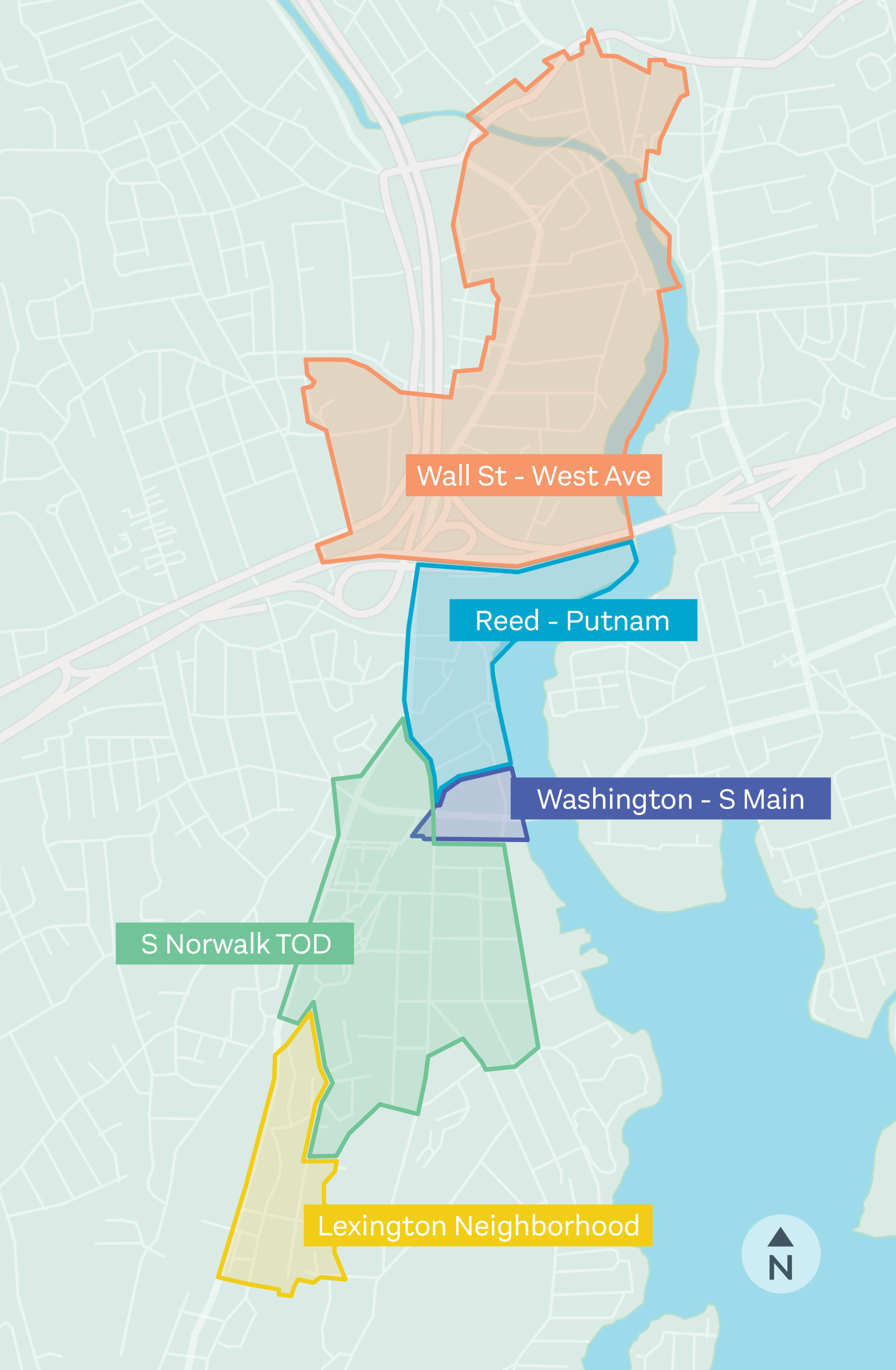
The Norwalk Redevelopment Agency’s work is implementing redevelopment plans is concentrated within Norwalk’s Urban Core. This jurisdiction covers four redevelopment and urban renewal areas: Wall Street - West Avenue Neighborhood, Reed - Putnam, Washington Street, and South Norwalk. Through grant procurement, progressive planning and collaboration with City departments, the Norwalk Redevelopment Agency proactively works to preserve and improve existing neighborhoods by attracting and fostering investment within these priority areas and among priority populations.
Planning Area Map
Strategic Plan
The Strategic Plan is a unified vision for the Agency’s future. Building upon the outcomes and recommendations of past planning efforts, this document details the strategy for project implementation and performance monitoring. The report seeks to identify and prioritize the key objectives, projects, schedules, financing and partnerships required to create more predictable outcomes that align with goals identified by the Agency and the City of Norwalk.
Through an in-depth examination of existing plans, extensive engagement with local stakeholders, and collaboration with City staff and elected officials, the report establishes the five-year strategic vision and work program for the Agency. Significant consideration has been given to the prioritization of key projects within the urban core, with project identification and ranking driven by input from stakeholders involved in the planning process.
As part of this forward-thinking strategy, the Agency has embraced the use of data, technology, and innovative partnerships. As such, the Agency has developed a collaborative framework for data-driven, equitable, and scalable urban innovation. These principles support the Agency’s efforts to enhance transparency, leverage open data, strengthen inter-city collaboration, integrate new technologies into community development, and seek alternative sources of funding through work with other municipalities, field experts, and universities.
ReIMAGINE
A Re:Imagined Norwalk utilizes the built environment to derive public good. It embraces new ideas and development with the future in mind, while learning from past successes and policy challenges
ReINVENT
A Re:Invented Norwalk considers how operations and goals are carried out through actionable projects. Restructuring, expanding, and implementing current initiatives and infrastructure will allow for more effective use of Agency resources and revitalization efforts.
ReNEW
A Re:Newed Norwalk attracts residents and visitors visually and physically. Innovative projects can breathe life into the community and help people navigate an interconnected network of streets, business districts, parks, and neighborhoods.
Our Focus

Community & Business Services
We work with the community and businesses to help navigate the local development processes, assist with project financing, and develop creative strategies for investment.

Infrastructure & Technology
Infrastructure and technology provide a framework for future private investment. Technological advances occur rapidly, and we should adapt over time as services and utilities evolve.
Housing & Real Estate Development
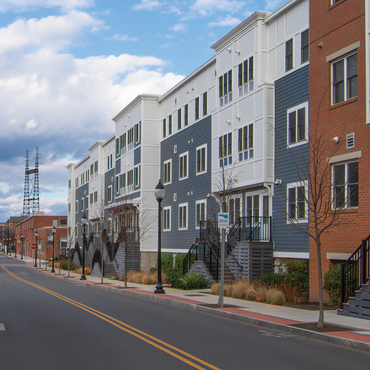
As an urban community with a vibrant history in close proximity to economic and cultural opportunities, Norwalk is poised to see growth in the near future.
Work Program
The Strategic Plan followed a three step process during its development.
Discovery
In the initial discovery phase, key stakeholders were identified and engaged to obtain perspective, and discuss how best to structure the Agency’s strategic planning effort. Upon reconciliation of the proposed work program, advisory committees were established and outreach was initiated through various surveys, meetings, and workshops.
Design
The second phase of the planning process involved the identification and prioritization of key projects. Numerous discussions were held with key stakeholders regarding an appropriate division of responsibilities, and how best to align internal and external operations with the City of Norwalk. Through intensive organizational analysis a detailed set of policy recommendations and implementation strategies have been developed and included in this Plan.
Deployment
The overall strategic planning process provided an opportunity for the Agency to engage with its partners in a meaningful way. Throughout the process stakeholders and committee members remained engaged through newsletters, surveys, workshops, and summary reports.
Performance Monitoring
In many ways the strategic plan process has just begun. Given the Plan’s focus on implementation, we must establish dedicated performance monitoring practices to ensure our projects and recommendations become a reality. The Strategic Plan sets forth an agreed upon “agency road map” for the next five years, with an aim to reimagine, reinvent, and renew how we manage our work in the urban core. It is the product of considerable effort on the part of the Agency, local staff and officials, business leaders, developers, residents, and more.
